

Road Classification as a Tool for Strategic Site Selection




In the US, roads are classified based on their roles, known as Functional Road Classes. There are different types, like highways for fast travel and local roads for neighborhoods. This classification helps authorities to plan and manage the road network better.
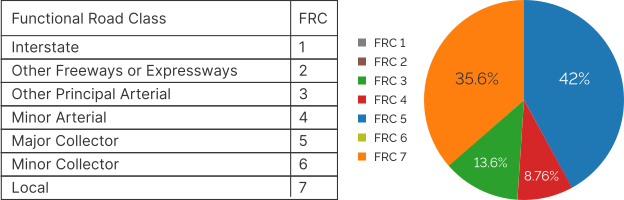
In general, the higher FRC is - and FRC 1 is the highest - the more traffic the road is expected to bear. For businesses like convenience stores and retail shops, road classification is crucial. A well-developed and accessible transportation network can attract more customers due to high traffic. But, it's not guaranteed that being near busy roads like highways (FRC 1) will always bring more customers. Fast highway traffic might make drivers just pass by without stopping. Even though high traffic volumes are expected, there are three important things to consider before making site selection decisions:
(1) How fast cars are moving – their average speed,
(2) How easy it is for people to reach your store – ease of access,
(3) And, is your store easy to see – visibility.
On the other hand, roads like freeways (FRC 1) can be advantageous for c-stores near exit ramps, rest areas, or busy interchanges. These locations offer a steady flow of travelers seeking quick stops.
Having Freeways and Expressways (FRC 2) and Local Roads (FRC 6) nearby can also help your business. Primary roads (FRC 2), which connect big cities and areas, make sure traffic is steady. This is great for convenience stores (c-stores) that want to attract both locals and travelers. Arterial roads (FRC 6), which link neighborhoods and activity centers, provide c-stores with access to a broader customer base.
It is important to stress that sometimes lower class roads can bear more traffic than higher ones - especially when you are dealing with FRC 3 - 5. So, actual traffic data collection is still a must, at least for adjoining roads.
Road classification can help businesses pick the right spot and attract more customers. In combination with data on traffic volumes, average speed, and local demographics, it can guide decision-making when it comes to site selection. With Ticon, you have the chance to put all these factors together and get precise, detailed insights. This makes decision-making easier and more accurate for you and your analytical team.
Contact us at info@ticon.co and receive analytical insights for site selection and operations planning purposes.